Skip to content
02 · CLEARING OVERSIGHT

Clearing oversight and close-out

02 · CLEARING OVERSIGHT

Clearing, checked as it happens.

Crews carry the app. It tracks where they clear and flags any clearing outside the approved area.
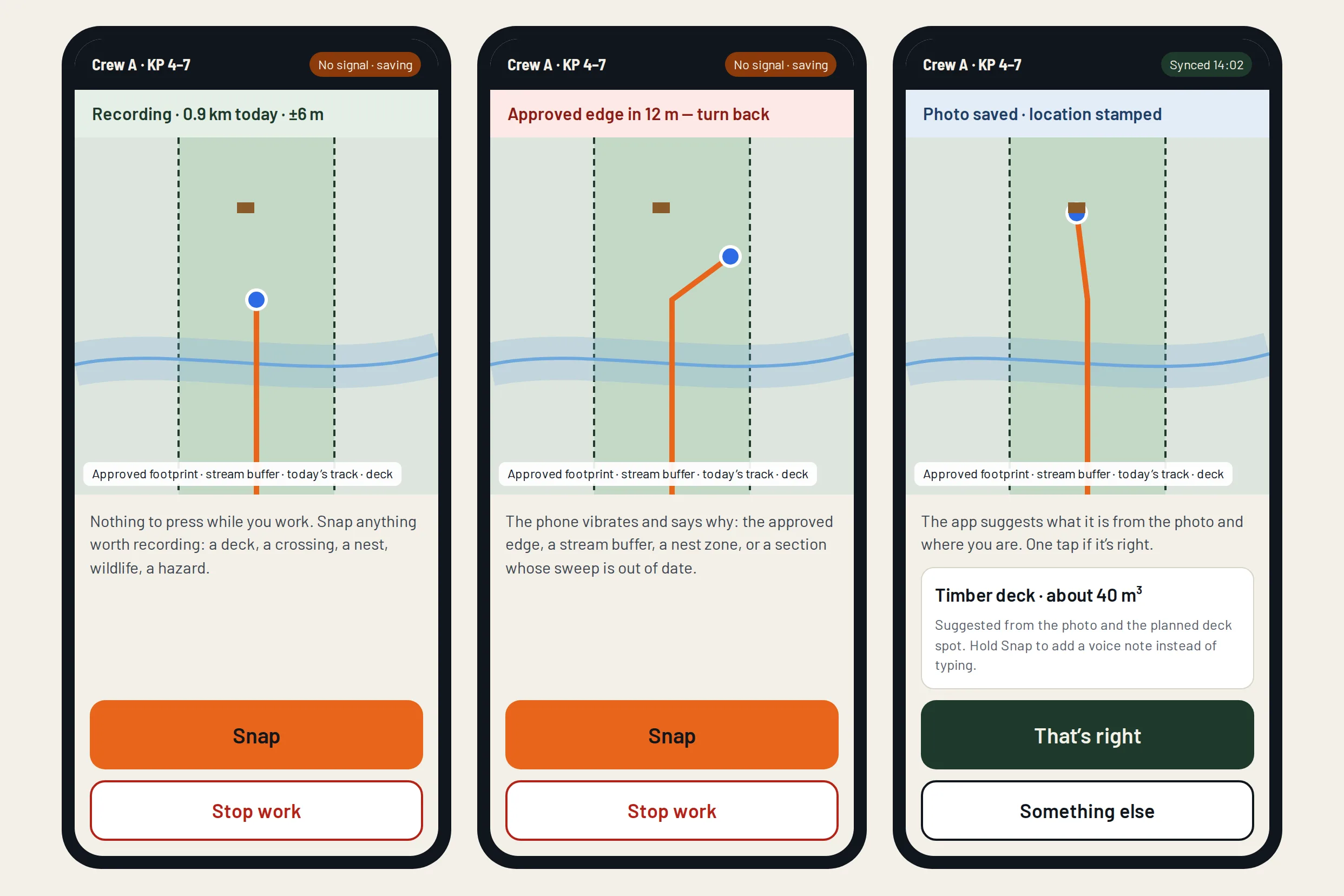
Three crew app screens: recording inside the approved footprint, a warning 12 m from the approved edge, and confirming a snapped timber deck
Sample figures
02 · TIMBER DISPOSITION

Every tree on the footprint, decided and tracked.

Mulch, deck, haul or burn — signed off, and on BC projects reconciled to the scale tickets.
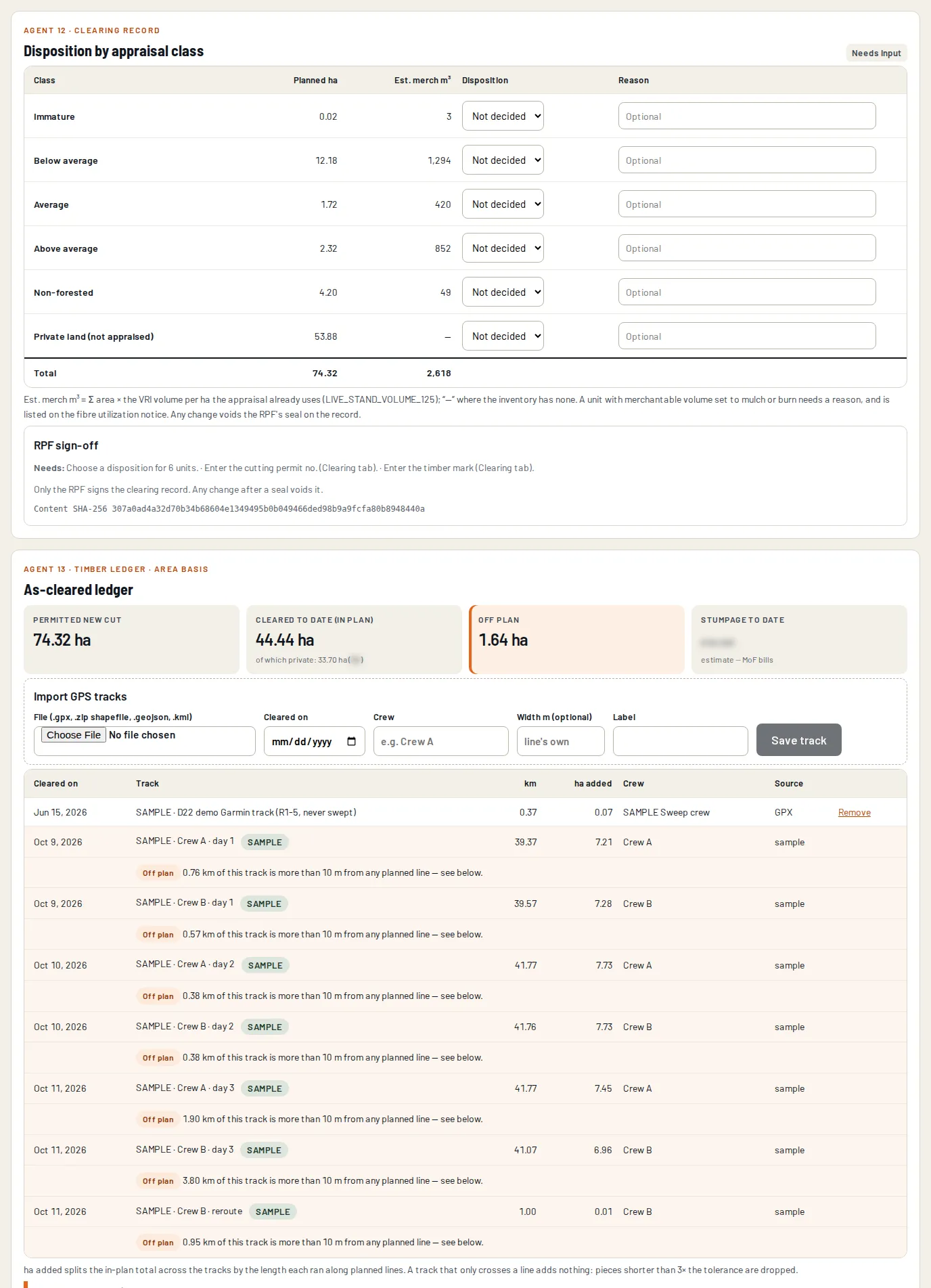
Clearing record and timber ledger: what happens to the timber in each appraisal class, area cleared against permitted, and each crew’s GPS tracks with off-plan pieces flagged
From the platform · sample project
CLOSE THE LOOP

Promised. Cleared. The difference, signed.

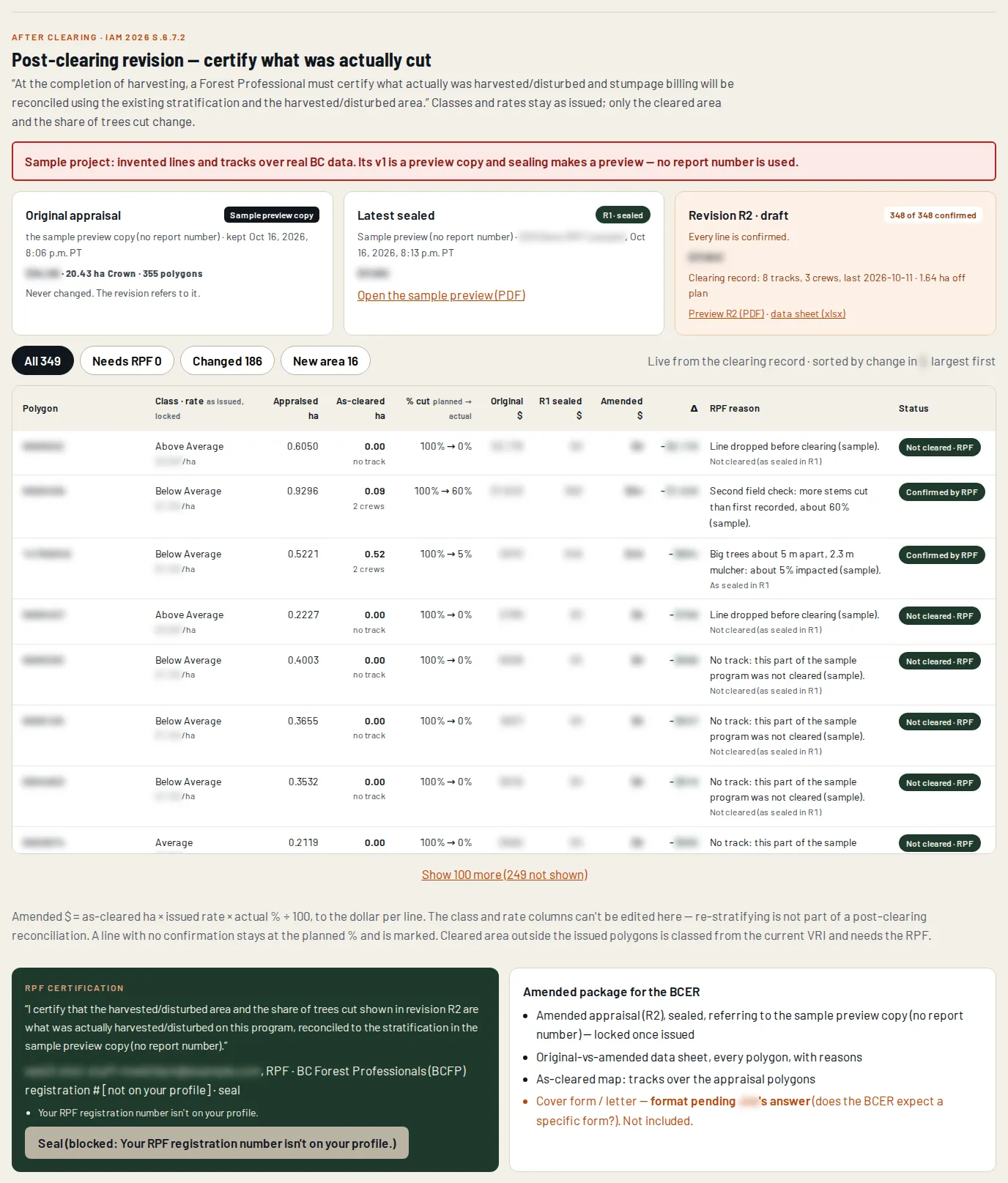
The as-cleared footprint laid over the issued appraisal.
Post-clearing revision comparing the original appraisal with the sealed and draft revisions, polygon by polygon, with the forester’s reason for each line
From the platform · sample project
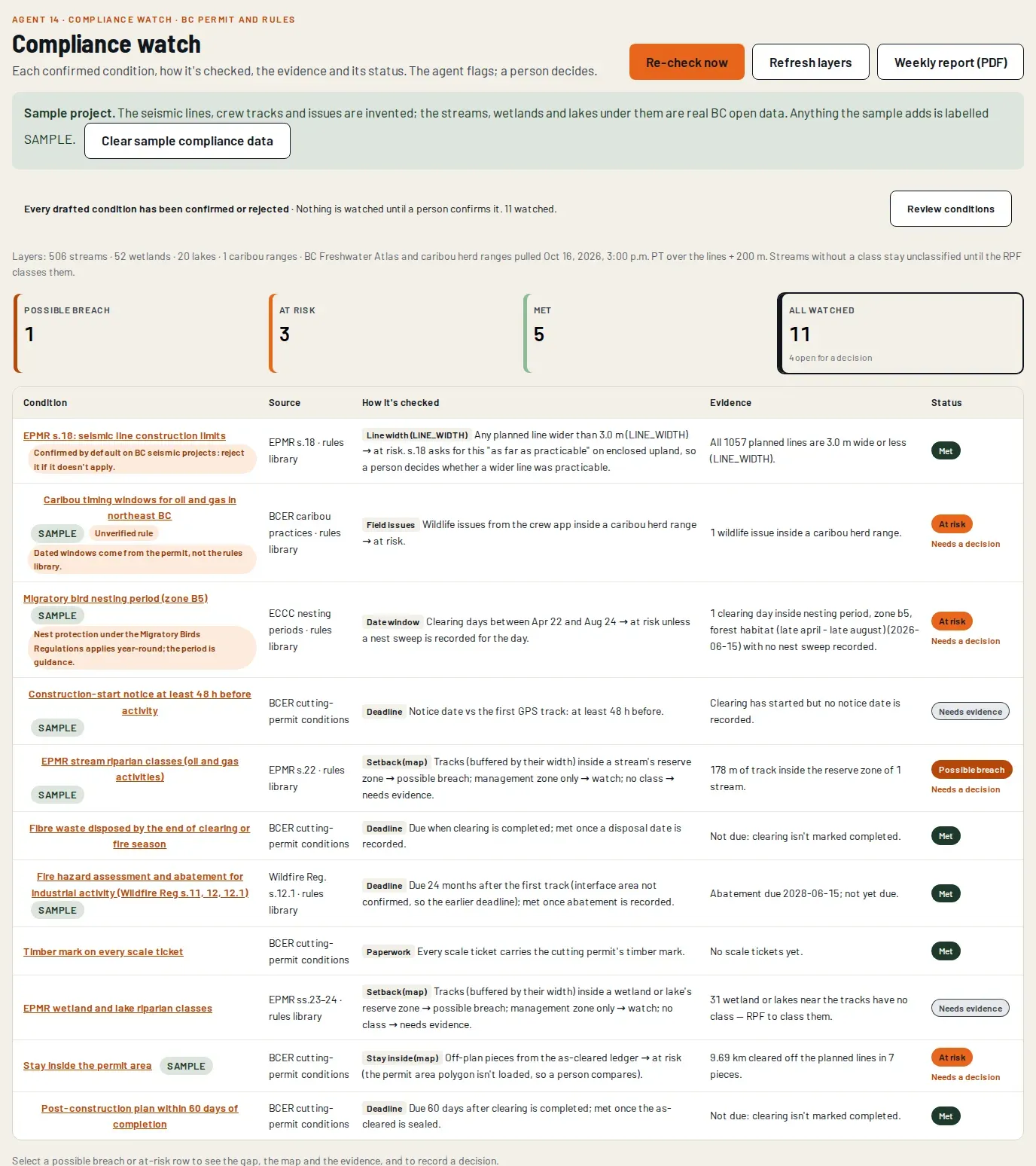
Compliance watch: possible-breach, at-risk and met counts, and each confirmed condition with how it is checked, the evidence and its status
From the platform · sample project
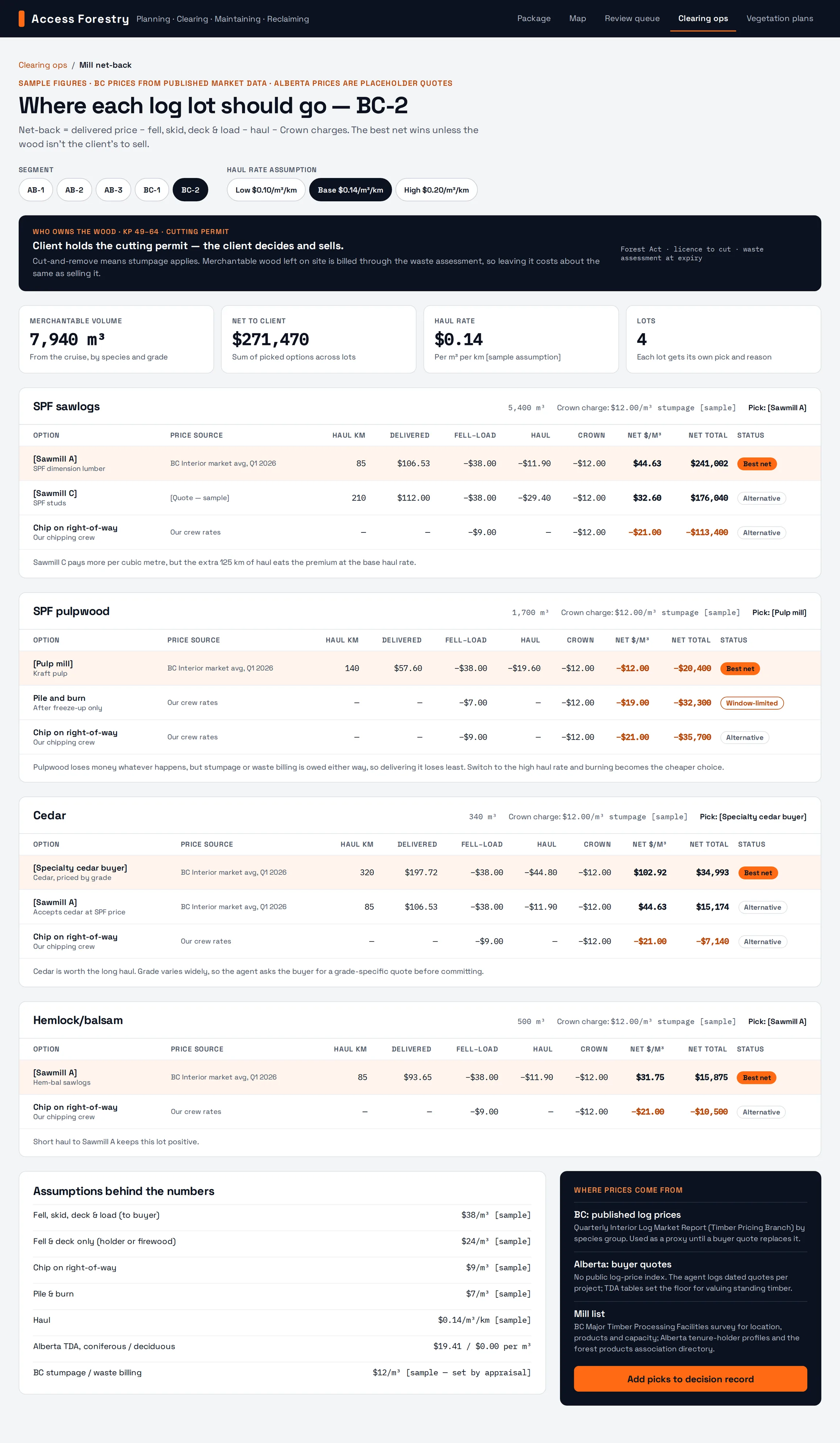
Mill net-back, where each log lot should go: each lot’s options with delivered price, logging, haul and Crown charges, the best net picked, and the assumptions behind the numbers
Sample figures
  • Crew app on every phoneiPhone and Android, works with no signal.
  • Warnings before a breachEdge, buffers, nests and sweeps.
  • Timber dispositionMulch, deck, haul or burn, area by area, matched to mill scale tickets.
  • Best market for each lotMill net-back shows where every log lot earns most.
  • Signed close-outApproved against cleared, every line confirmed.

Questions

What happens to timber cleared from a right-of-way?

In BC, it must be reported and paid for whether or not it is used, and putting it to use is encouraged. Before wasting it, permit holders should tell interested parties, such as mill operators, forest licensees and local First Nations, its size, species, volume and location. In Alberta's Green Area, trees that meet the utilization standard are decked separately and must be removed within 6 months of clearing.

What does clearing oversight involve?

Checking the clearing against the approval while it happens, then closing it out. Crews carry the app, which works with no signal, tracks where they clear and flags any clearing outside the approved area, and keeps a line closed until its nest sweep is current and clear of nest buffers. The as-cleared footprint is compared with what was approved and signed off, and on BC projects timber decisions and decks are recorded.

How do crews stay inside the approved area?

The crew app shows the approved footprint on a map with the crew's position, and tracks where they clear. It uses the phone's GPS and works offline; clearing recorded outside the footprint is flagged as off-plan for the forester to review.

What is due after construction in BC?

A post-construction plan, due within 60 days of completing construction. The BC Energy Regulator requires it for energy resource activities that cleared or disturbed new land, except geophysical activities. It carries the as-cleared areas, which the Regulator forwards to the Ministry of Forests for stumpage billing.

When must clearing debris be disposed of in Alberta?

Before construction starts, and within 12 months of clearing at the latest. This applies to clearing for pipelines, wells, roads, utility lines and survey lines, and a forest officer may extend or reduce the time.

Tell us about your project.

Start the conversation