04 · FOREST RECLAMATION
Back to forest, to certificate.
Restoration plans, treatment units and visits, from the as-cleared map.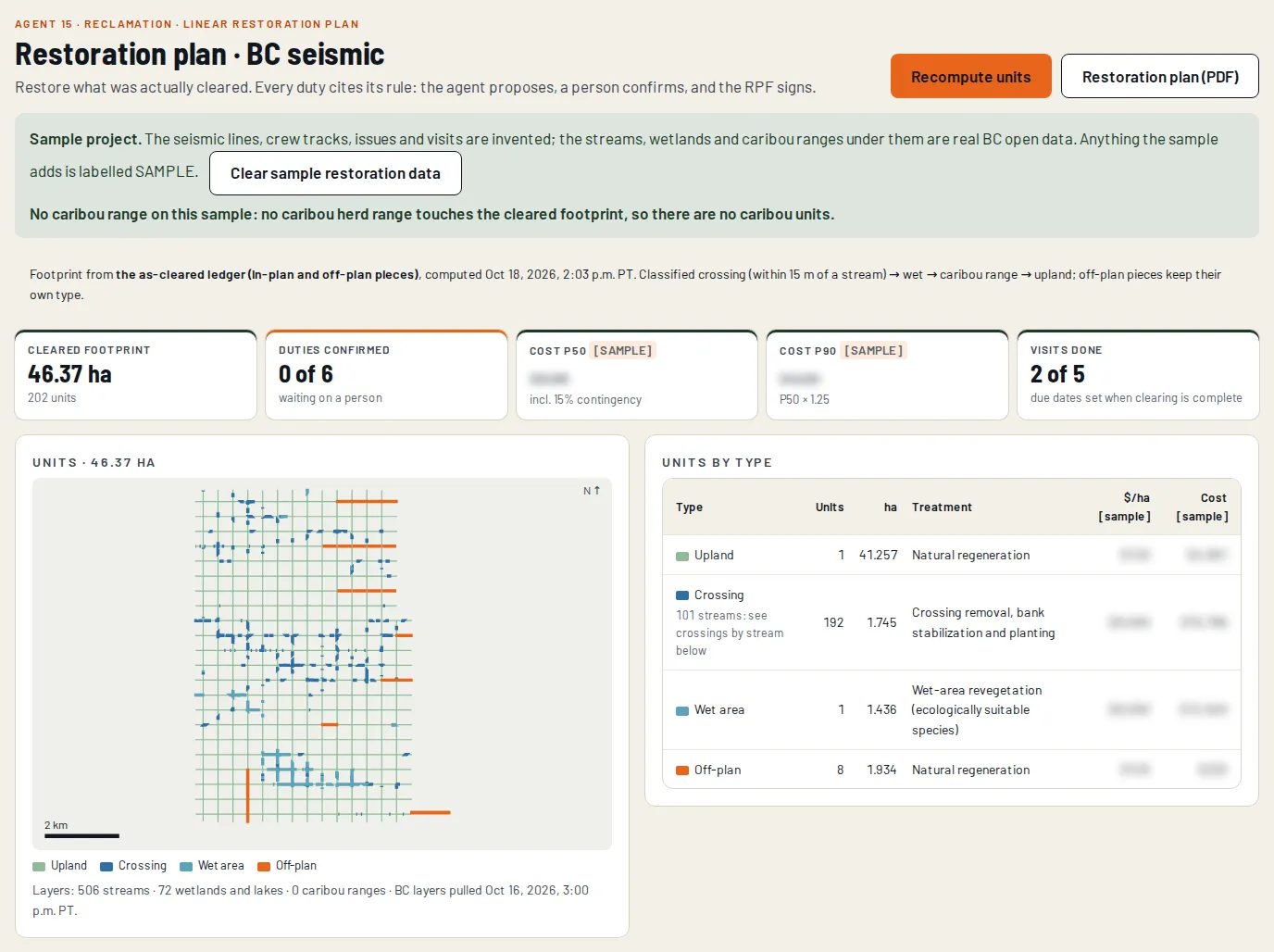
It means the regulator has issued a reclamation certificate, which certifies that the land has been restored and its reclamation requirements met. The goal is equivalent land capability: land that can support uses similar to those it supported before, though not necessarily the same ones. Certificates are issued by the Alberta Energy Regulator, for example for well sites, and by Alberta Environment and Protected Areas.
There is no set time: it depends on the original land type, and revegetation time depends on how much soil was disturbed. In Alberta, where seedlings were planted, at least two growing seasons must pass before the vegetation assessment for a forested-land certificate. In BC, the Regulator expects vegetation on Crown land outside the Agricultural Land Reserve to be assessed after at least two full growing seasons, or three where seedlings were planted.
In Alberta, the site must meet the reclamation criteria for its end land use, and any contamination must be cleaned up before applying. For forested wellsites and associated facilities, the criteria typically call for landscape, vegetation and soils assessments, compared with the surrounding area or a suitable reference. A professional signs off after reclamation, before the application.
Yes. After the Alberta Energy Regulator issues a certificate, the company stays responsible for surface issues such as topography, vegetation, soil texture and drainage for 25 years, and permanently for contamination and infrastructure left below the surface. The regulator audits certified sites every year, at random or based on risk.
That the BC Energy Regulator is satisfied, on what it knows at the time, that the restoration obligations have been met. The restoration part of the application (the former Part 2) is now the Regulator's Restoration Assessment form, with a report by a qualified professional confirming the site has been effectively restored.