What was promised. What was cleared. And the difference.
When proponents use Access Forestry, the First Nation can see the work in its territory as it happens.Access Forestry is free for First Nations. The proponent licenses each project.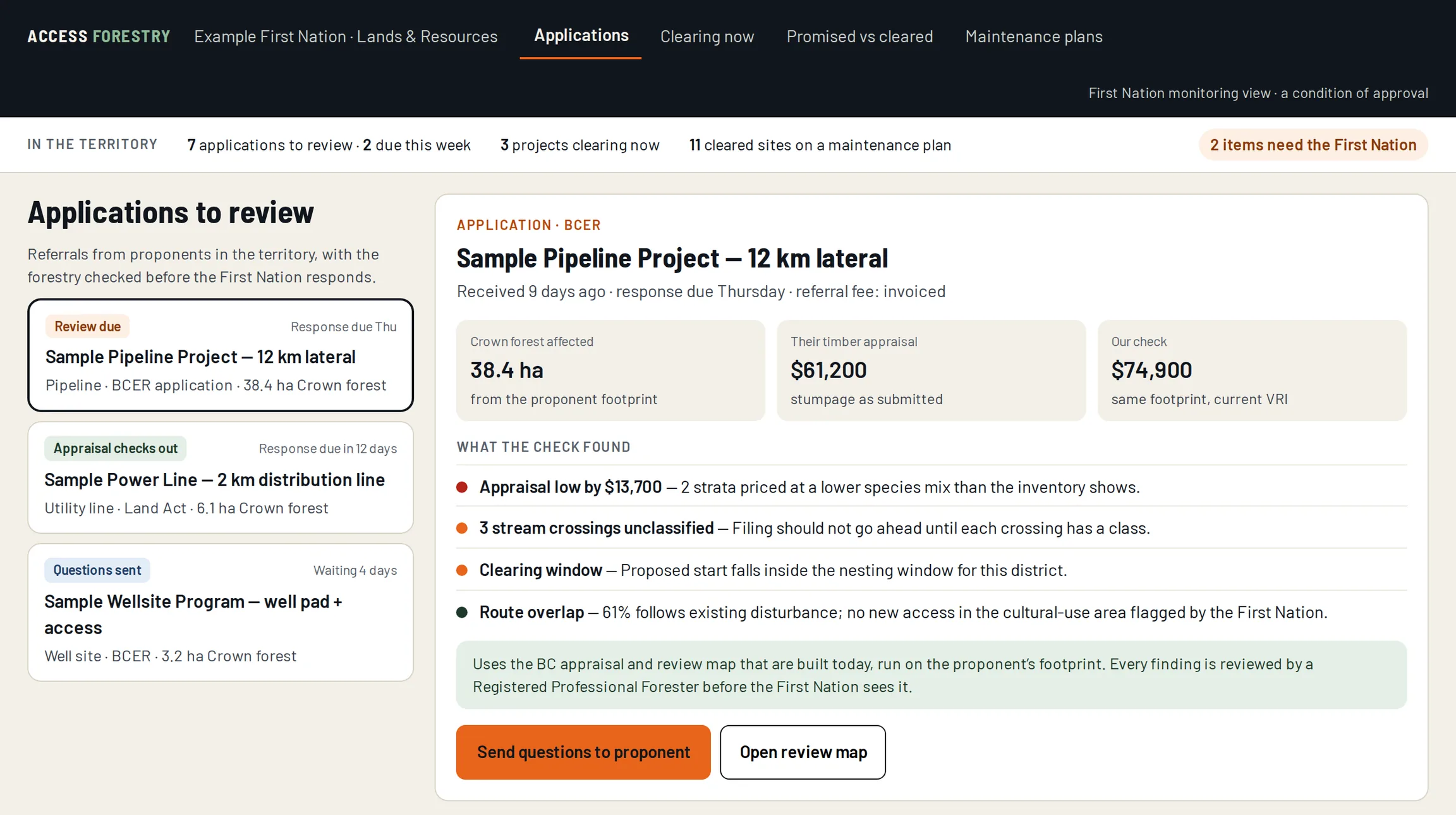
- 01 · BEFORELock what was promisedFootprint and appraisal, frozen.
- 02 · DURINGCapture what happensGPS, decks, sweeps, crossings.
- 03 · AFTERClose the loopApproved vs cleared, Forester-signed.
- 04 · AFTERWARDSThe land comes backMaintenance until it’s returned.
What First Nations look for, and how Access Forestry helps
- Limits on new disturbanceEvery hectare cleared, totalled across the territory.
- The First Nation’s conditionsEach one tracked to the evidence that closes it.
- Old forest, traplines, cultural areasTreated as hard limits in planning.
- Wildlife and timingSweeps, nests and windows checked before clearing.
- Water and fishEvery crossing classed, buffers applied.
- Heritage and chance findsOne press sets a stop-work zone.
- Timber valueAppraisal checked, every deck tracked.
- Monitors and guardiansThe First Nation’s people on the same map.
The First Nation’s knowledge stays the First Nation’s.
Seen only by the First Nation and the project’s Forester. Never shared with proponents, never used by AI.Questions
What can a First Nation see when a proponent uses Access Forestry?
The work on the projects shared with it, in its territory, as it happens. That means the footprint and appraisal as promised, the clearing as it is recorded, and the Forester-signed close-out comparing what was approved with what was cleared.
Does Access Forestry share a First Nation's information?
No: the First Nation's own records stay its own. Its engagement records and commitments are seen only by Access Forestry staff and the project's Forester, are never shown to proponents and are never sent to AI; only the flags the First Nation raises are shared with the proponent.
How does the promised-vs-cleared comparison work?
The footprint and appraisal are locked when the appraisal is issued, and the as-cleared GPS tracks are laid over them after clearing. A Registered Professional Forester confirms each line with a reason and signs the revision, and the signed close-out goes to the First Nations the project is shared with.
Who decides which First Nations see a project?
Access to each project is granted to a named First Nation, and the date it was granted is recorded. The proponent sees that access was granted, and to whom, and any flags the First Nation raises, but not the First Nation's own records.